- Home
- News
- RFIBER – China One-Stop Wall Repair Patches Vendor: Simplified Solutions for Modern Building Maintenance
RFIBER – China One-Stop Wall Repair Patches Vendor: Simplified Solutions for Modern Building Maintenance
How often is the structural integrity of a building compromised by something as seemingly minor as a hairline fracture in the drywall? Can a simple hole from a door handle or a plumbing leak lead to disproportionate maintenance costs and long-term aesthetic degradation? These are the practical challenges facing property managers and homeowners alike. In the daily lifecycle of residential and commercial structures, wall damage occurs from time to time.
While traditional repair methods often involve extensive sanding, multi-day drying times, and specialized labor, the market has shifted toward a more efficient model. As a prominent China One-Stop Wall Repair Patches Vendor, RFIBER provides a streamlined alternative that addresses these vulnerabilities through standardized, high-performance composite materials designed for immediate application.
The Growing Demand for Simplified Building Maintenance
Modern interiors, predominantly constructed using gypsum board, drywall, and plaster, offer excellent versatility but remain susceptible to impact and environmental wear. Cracks often develop near door frames or windows due to subtle foundation shifts, while holes created by hardware installation or accidental damage can mar an otherwise professional environment. When left unaddressed, these small gaps can become entry points for moisture or pests, eventually leading to more significant structural concerns.
Historically, repairing a hole in a wall required a multi-step process: cutting a replacement piece of board, installing wooden supports, taping seams, and applying several layers of joint compound. This complexity often leads to project delays or results in uneven surfaces that fail to match the original wall texture. Shanghai Ruifiber Industry Co., Ltd. recognizes that the modern building maintenance sector requires a departure from these labor-intensive techniques. By focusing on “simplified solutions,” the industry is moving toward products that combine structural reinforcement with ease of use, allowing for professional-grade results without the need for an extensive toolkit.
Defining the Role of a One-Stop Wall Repair Patches Supplier
Shanghai Ruifiber Industry Co., Ltd., headquartered in Shanghai, operates a modern manufacturing base spanning over 20,000 square meters in Fengxian, Xuzhou. Since its commitment to high-performance materials began in 2018, the company has established itself as a significant force in the global supply chain for laid scrim mesh and hardware building products. Functioning as a specialized wall repair patches vendor, the organization leverages its large-scale production capacity to serve a diverse international clientele across Europe, North America, and the Middle East.
The concept of a “one-stop” provider is central to how RFIBER operates. Rather than simply acting as a manufacturer of raw mesh, the company integrates research, development, and production to offer a cohesive range of repair products. This vertical integration ensures that every component—from the adhesive properties of the backing to the tensile strength of the metal reinforcement—meets consistent quality standards. For distributors and large-scale maintenance firms, partnering with a centralized wall repair patches vendor simplifies the procurement process, ensuring that the materials used in New York or Dubai possess the same reliability and ease of installation.
Technical Composition of the Self-Adhesive Wall Patch
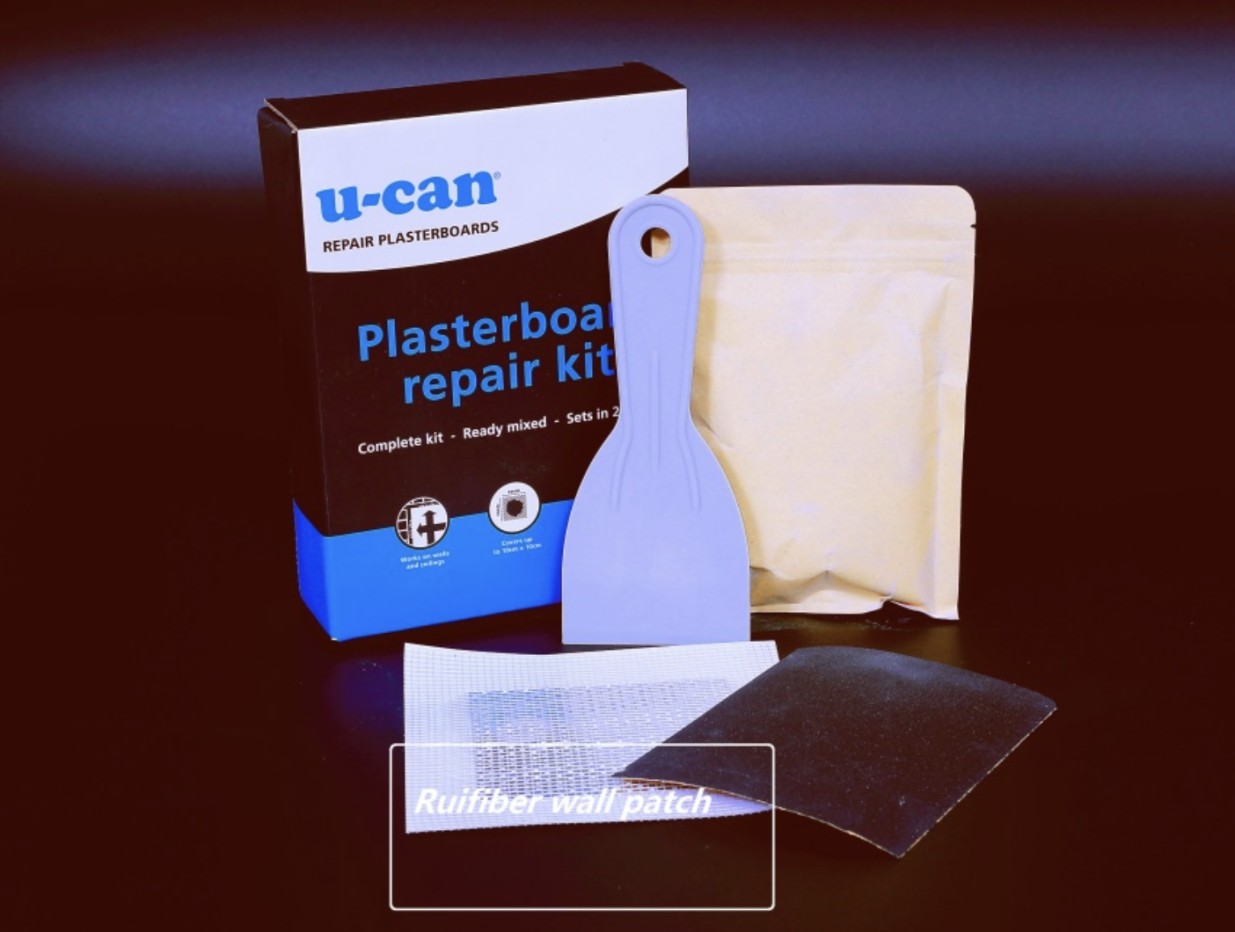
The efficacy of a modern repair solution lies in its material composition. RFIBER produces a specialized composite wall patch that integrates structural metal with flexible fiberglass. The core of the patch typically features a perforated aluminum or galvanized steel plate, which provides the necessary rigidity to cover a void without sagging. This metal center is then laminated with a high-strength fiberglass self-adhesive mesh.
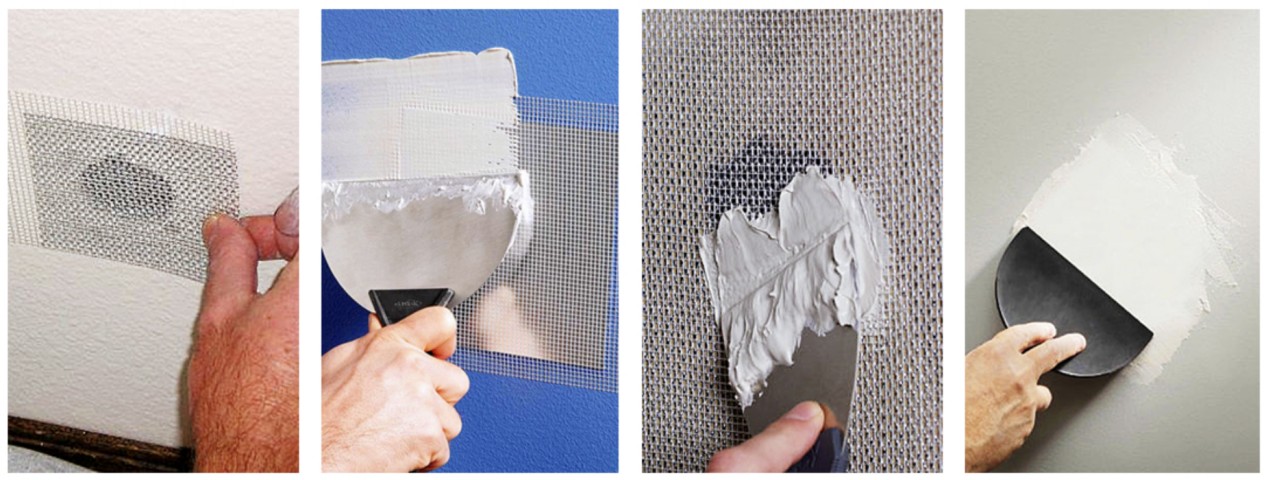
The “peel, stick, and coat” workflow is a significant departure from traditional masonry work. Because the patches are self-adhesive, they eliminate the need for pre-taping or mechanical fasteners. Once the patch is applied over the cleaned hole, it creates a stable, low-profile bridge. A thin layer of spackle or joint compound is then applied over the mesh. The perforated design of the metal plate and the open weave of the fiberglass allow the compound to penetrate through the patch, creating a mechanical bond with the interior of the wall. This results in a repair that is not only flat but also resistant to the recurring cracks that often plague non-reinforced repairs.
Versatility Across Scales and Substrates
A major advantage of working with a comprehensive wall repair patches vendor is the availability of diverse specifications tailored to specific damage profiles. Shanghai Ruifiber Industry Co., Ltd. produces patches in a variety of sizes, ranging from compact 2×2 inch squares for small nail holes to larger 8×8 inch formats capable of covering significant impact damage. This variety ensures that maintenance teams can select the most appropriate size, minimizing material waste and reducing the amount of compound needed to feather the edges.
Beyond standard patches, RFIBER provides a full suite of complementary products, including joint tapes and glass fiber mesh. This creates a holistic system for wall reinforcement. For example, in high-traffic commercial areas where walls are frequently bumped by carts or equipment, using a reinforced wall patch prevents the repeated crumbling of plaster. These products are compatible with various substrates, including drywall, plaster, and even some masonry surfaces, making them a versatile tool for diverse renovation projects.
Enhancing Operational Efficiency and Cost Control
In the context of professional building management, time is a direct proxy for cost. Traditional wall repairs often require a skilled technician to visit a site multiple times to apply, sand, and re-apply compound. By utilizing standardized solutions from a professional wall repair patches vendor, the initial repair stage is completed in a fraction of the time. The thin profile of the fiberglass and metal composite requires less compound to hide, which in turn leads to faster drying times and fewer sanding passes.
For renovation companies and property owners, this efficiency translates to lower labor costs and reduced disruption to the occupants of a building. In a hotel or office setting, the ability to repair a wall and have it ready for painting within a single afternoon is a substantial operational benefit. Furthermore, the durability provided by the metal reinforcement reduces the likelihood of “call-backs”—situations where a repair fails and must be redone—thereby protecting the long-term maintenance budget.
Standardized Materials: The Future of Building Maintenance
The trend in the global construction and maintenance industry is moving toward modularity and standardization. As the “after-market” for buildings grows, there is an increasing reliance on materials that are reliable, easy to transport, and simple to apply correctly. The development of high-performance composites by companies like Shanghai Ruifiber Industry Co., Ltd. reflects this shift. By focusing on the intersection of industrial fabrics and hardware products, RFIBER helps bridge the gap between complex engineering and practical, on-site application.
The focus remains on providing consistent quality that can be trusted by world-class clients. Whether it is a small-scale home repair or a large-scale commercial refurbishment, the use of a standardized wall repair patches vendor ensures that the results are predictable and durable. As building standards continue to emphasize longevity and efficiency, the role of specialized manufacturers in providing these “simplified solutions” will remain a cornerstone of modern property care.
If you are looking for reliable wall repair patches, custom product specifications, or bulk supply solutions, please contact RFIBER directly through the official website: https://www.ruifiber.com/.